Those who care for others need care, too
When someone who has been part of a care community passes away, the loss is felt by more than their family.
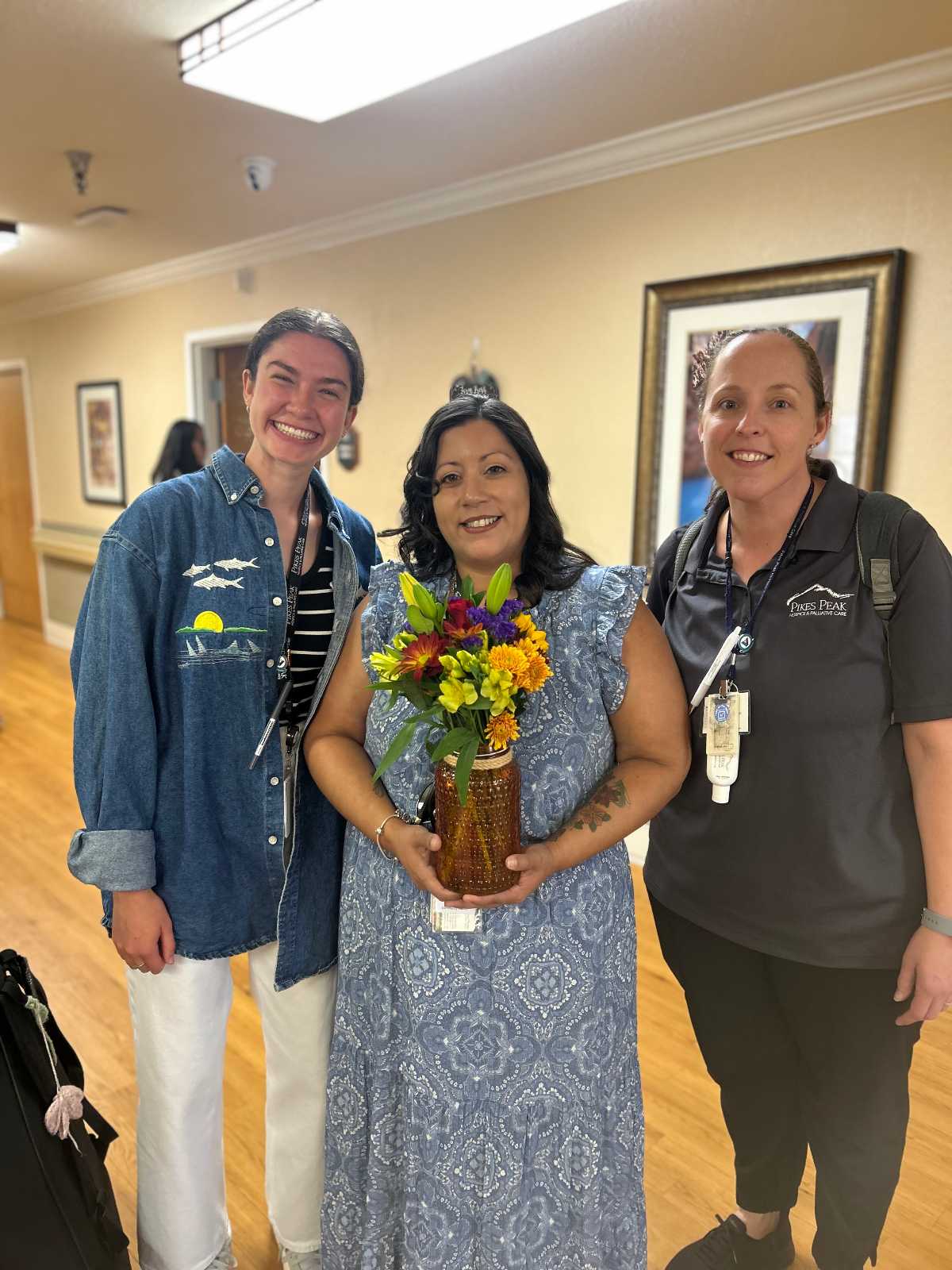
Recently, Pikes Peak Hospice & Palliative Care Community Liaison Miriam Thomas visited Pikes Peak Post Acute to bring flowers and a signed card offering condolences following the loss of a longtime resident.
It was a simple gesture, but one that recognizes something important: those who care for others need care and support when they experience loss, too.
Grief in the caregiving community
People who work in elder care and hospice often develop meaningful relationships with the residents they serve. They may know a resident for months or years. They learn their stories, their personalities, their preferences and the little things that make them who they are.
That relationship can make the loss of a resident deeply personal.
Caregivers and other healthcare professionals are accustomed to supporting families through some of life's most difficult moments. But when someone they have cared for dies, they may need support themselves.
Their grief deserves to be acknowledged.
A kind word, a card, flowers or simply taking a moment to remember the person who has died can help caregivers feel seen and supported. These gestures also remind care teams that the compassion they give to others is valued and that they do not have to carry every loss alone.
Supporting those who provide care
Hospice is often described as care for patients and families, but compassion extends to the broader community of people who provide care as well.
At Pikes Peak Hospice & Palliative Care, we value our relationships with skilled nursing and post-acute care partners throughout the community. Supporting these professionals includes recognizing the emotional impact of the work they do and being present when they experience loss.
Miriam's visit to Pikes Peak Post Acute was a small but meaningful reminder that grief can touch an entire care community.
Because those who spend their lives caring for others deserve compassion, understanding and support when they need it, too.
Go Back Recently, Pikes Peak Hospice & Palliative Care Community Liaison Miriam Thomas visited Pikes Peak Post Acute to bring flowers and a signed card offering condolences following the loss of a longtime resident.
It was a simple gesture, but one that recognizes something important: those who care for others need care and support when they experience loss, too.
Grief in the caregiving community
People who work in elder care and hospice often develop meaningful relationships with the residents they serve. They may know a resident for months or years. They learn their stories, their personalities, their preferences and the little things that make them who they are.
That relationship can make the loss of a resident deeply personal.
Caregivers and other healthcare professionals are accustomed to supporting families through some of life's most difficult moments. But when someone they have cared for dies, they may need support themselves.
Their grief deserves to be acknowledged.
A kind word, a card, flowers or simply taking a moment to remember the person who has died can help caregivers feel seen and supported. These gestures also remind care teams that the compassion they give to others is valued and that they do not have to carry every loss alone.
Supporting those who provide care
Hospice is often described as care for patients and families, but compassion extends to the broader community of people who provide care as well.
At Pikes Peak Hospice & Palliative Care, we value our relationships with skilled nursing and post-acute care partners throughout the community. Supporting these professionals includes recognizing the emotional impact of the work they do and being present when they experience loss.
Miriam's visit to Pikes Peak Post Acute was a small but meaningful reminder that grief can touch an entire care community.
Because those who spend their lives caring for others deserve compassion, understanding and support when they need it, too.